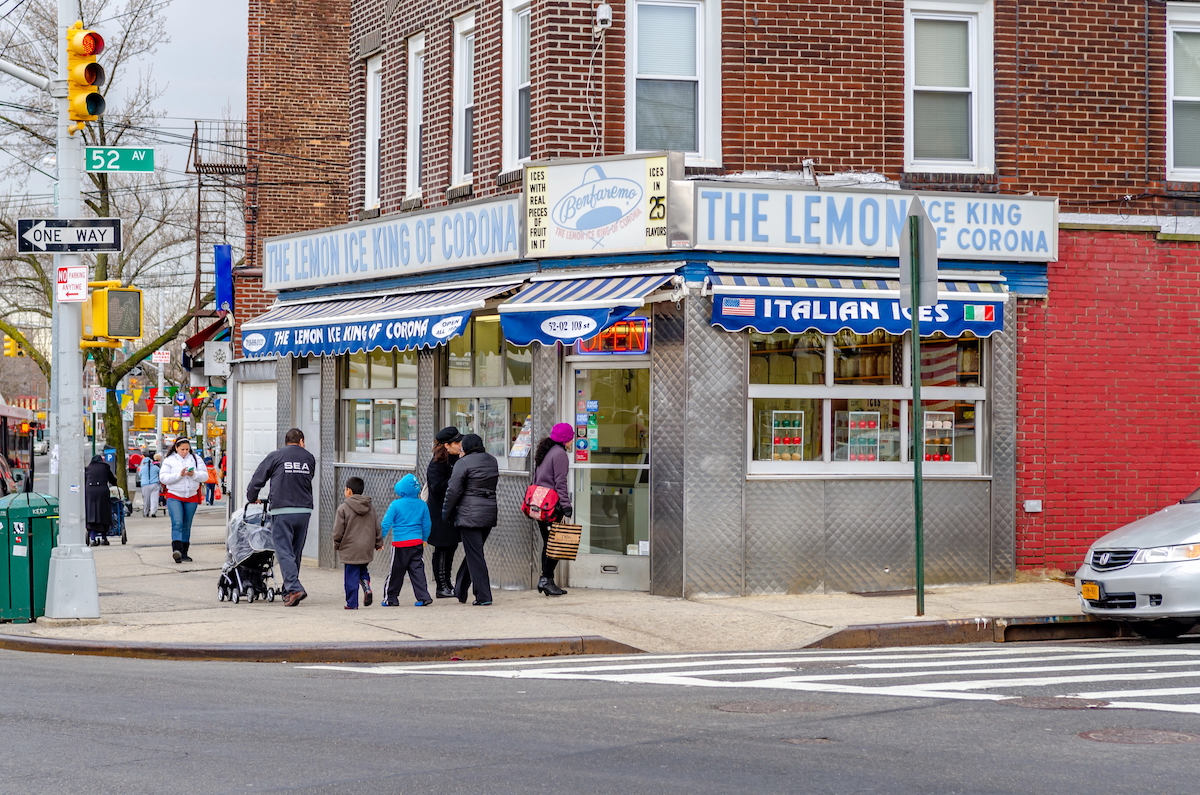
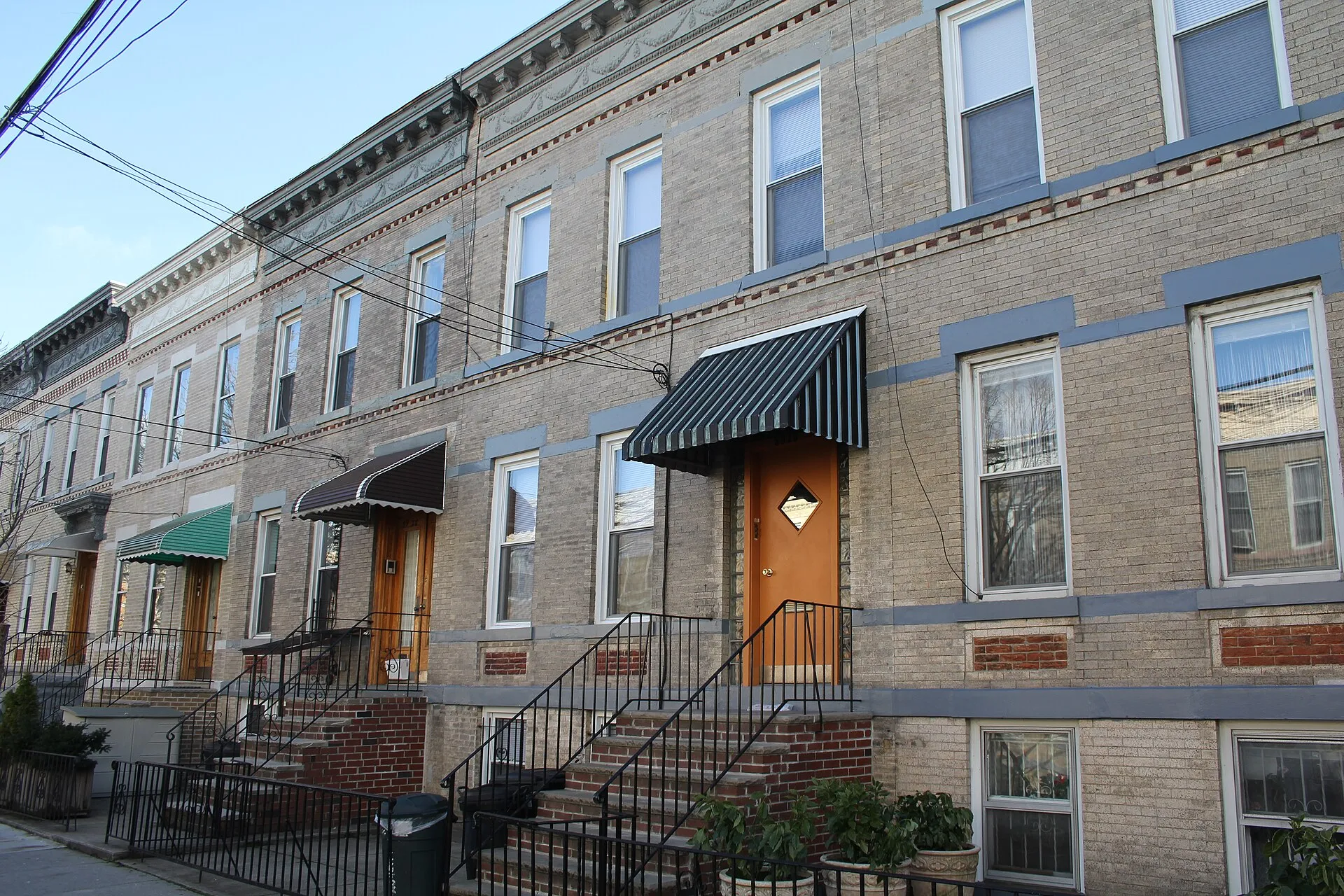
Selling rental property in Queens, whether a two-family house, a small apartment building or a storefront, means planning for several taxes. The federal government taxes the gain, including a share tied to past depreciation, and New York taxes it as income too. New York State and New York City also each charge a transfer tax when the deed changes hands.
How much of the profit you keep depends on the price you get, on how well you can document what you paid and spent on the building, and on timing. The biggest lever is usually a 1031 exchange, which lets you put the money into another investment property and postpone the federal tax on the gain.
What buyers look at when pricing a Queens rental building
Buyers of small rental buildings usually price them from their income. The rent roll (the list of units, tenants and rents), the leases and how many units are rent-regulated (subject to New York’s rent limits) shape what a buyer can earn. Repairs that are due and open building violations lower what buyers will pay.
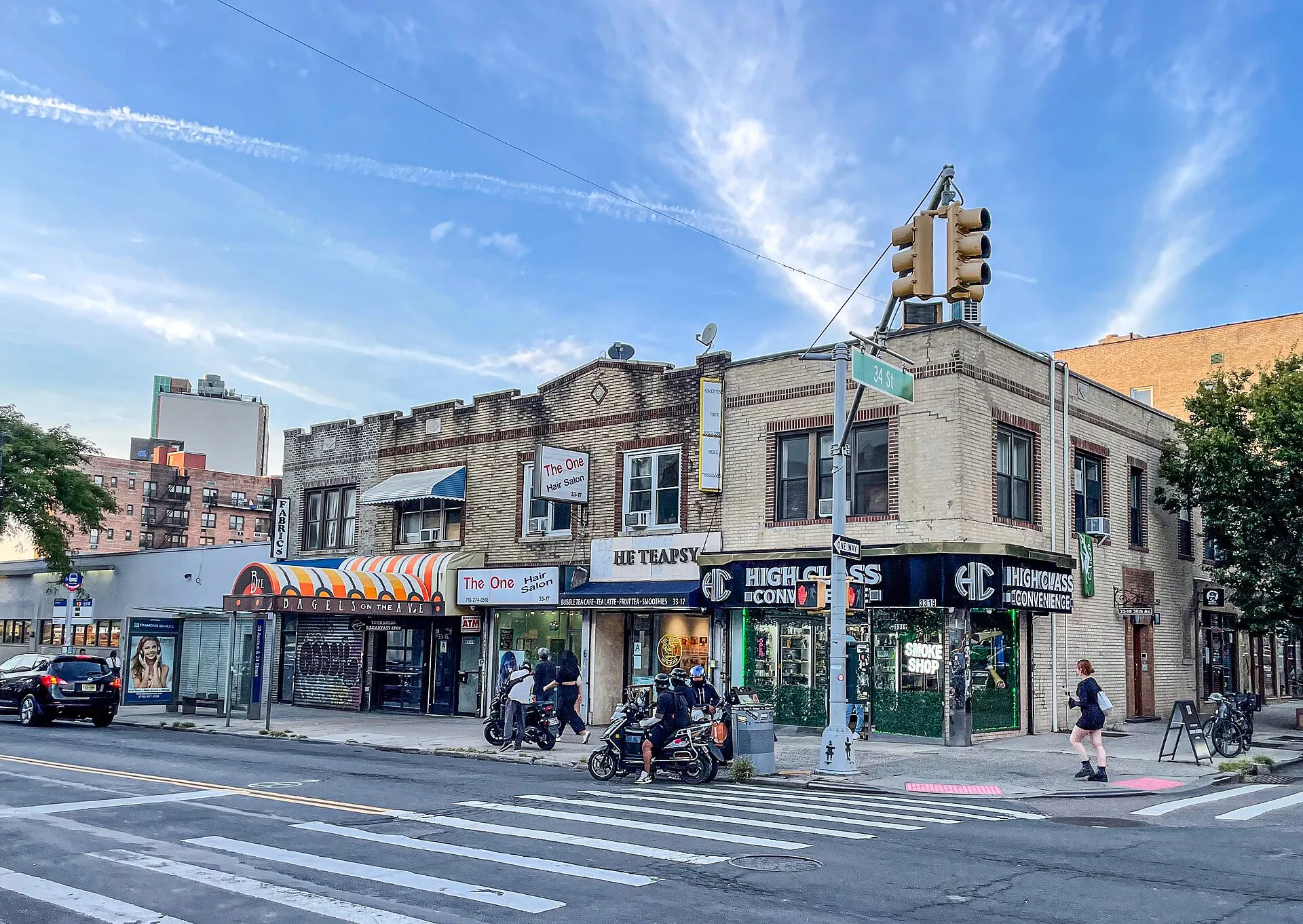
Financing matters too. Many buyers borrow, so when mortgage rates are high the same rent supports a smaller loan, and offers fall. When rates ease, buyers can stretch further. Location still sets the baseline: prices differ widely across the neighborhoods in Queens, with transit access and local demand making a large difference.
A mixed-use building with a store on the ground floor also depends on the commercial tenant: how long the lease runs and whether the rent is at market level. If the storefront houses your own company and you plan to sell the business too, that is a separate deal; our guide on how to sell a business covers that side.
How the gain on a rental property sale is taxed
The taxable gain is the amount realized minus your adjusted basis. According to IRS Publication 544, the amount realized is the money and property you receive, plus any of your liabilities the buyer takes over, such as a mortgage, minus selling expenses such as broker commissions. Adjusted basis is your cost, plus improvements lasting over a year, minus depreciation.
Because depreciation lowers your basis every year you own a rental, an owner who bought decades ago may face a gain far larger than the difference between purchase and sale price suggests. Keep records of improvements, such as a new roof or boiler, because they raise the basis and shrink the gain.
A rental building held more than one year is section 1231 property, whose net gain is generally taxed as a long-term capital gain. The IRS overview of capital gains and losses lists rates of 0%, 15% and 20% depending on taxable income. A gain on property held one year or less is taxed as ordinary income.
Depreciation recapture on rental property
Investors often call the part of the gain reflecting past depreciation “depreciation recapture.” The IRS term is unrecaptured section 1250 gain, after the tax code section covering depreciable real property such as buildings. It is taxed at up to 25%, not at the lower capital gains rates.
Keep permanent records of the building’s cost, the depreciation you claimed each year and other changes to its basis. Publication 544 says you need them to figure the gain that must be reported as ordinary income when you sell.
Rental buildings placed in service after 1986 are depreciated on the straight-line method: the same amount each year. Additional depreciation is the part the IRS recaptures as ordinary income. Publication 544 explains that a straight-line building held more than a year has none, so all of its depreciation-related gain is unrecaptured section 1250 gain, taxed at up to 25%.
Appliances and other equipment sold with the building, and improvements on which you took bonus depreciation, are different: gain from that depreciation is generally taxed as ordinary income.
The 3.8% net investment income tax and New York income tax
Higher earners may also owe the net investment income tax, a 3.8% federal tax. It applies to the smaller of net investment income or the amount by which modified adjusted gross income (generally your adjusted gross income) exceeds $250,000 for married couples filing jointly, $200,000 for single or head of household filers and $125,000 for married filing separately.
Net investment income includes rents and net gains from selling real estate, unless the property is held in a trade or business that the tax does not cover. A large one-time gain from selling a building can push an owner over the threshold even in a year with otherwise modest income.
New York also taxes the gain as income. Sellers who are not New York State residents must figure the gain and, unless an exemption applies, pay estimated state income tax with a form such as IT-2663 when the deed is filed.
New York State transfer tax and the mansion tax
The New York State real estate transfer tax is $2 for each $500 of the price, or 0.4%. Since July 1, 2019, conveyances in New York City carry an additional base tax of $1.25 per $500 (another 0.25%) when residential property sells for $3 million or more, or other property for $2 million or more.
The seller pays the base and additional base taxes, unless the contract or an exemption shifts them to the buyer. For property in New York City, the state return is Form TP-584-NYC.
The mansion tax rarely matters to a seller directly. It is a 1% tax on residences selling for $1 million or more, paid by the buyer. In New York City, residential sales of $2 million or more add a supplemental tax of 0.25% to 2.9%. The seller is liable only if the buyer fails to pay or is exempt.
NYC transfer tax on rental property
The city charges its own Real Property Transfer Tax (RPTT) on top of the state tax. The NYC Department of Finance sets one rate scale for one- to three-family houses, condos and co-op apartments, and a higher one for all other transfers, which covers buildings with four or more apartments and commercial property.
| Property sold | Price $500,000 or less | Price above $500,000 |
|---|---|---|
| One- to three-family house, condo, co-op | 1% | 1.425% |
| All other transfers, e.g. apartment buildings, storefronts | 1.425% | 2.625% |
The tax is usually paid with the closing costs, and the return is filed online through ACRIS, the city’s property records system, within 30 days of the transfer. Ask your closing attorney which scale applies to a small mixed-use building.
On a two-family house selling for $1.2 million, state and city transfer taxes total 1.825%, or $21,900: the seller’s state tax of 0.4% ($4,800) plus the city’s 1.425% ($17,100). The Department of Finance does not say who pays the city tax and can pursue either party, so check the contract. The buyer also owes the 1% mansion tax, or $12,000.
A 1031 exchange does not avoid these taxes. New York State defines a taxable conveyance to include an exchange, and the city tax applies to sales, grants, assignments, transfers or surrenders of real property, so both are due when the Queens building is deeded over.
How a 1031 exchange works
A 1031 exchange, named after section 1031 of the Internal Revenue Code, lets you trade one investment property for another of a like kind without paying tax on the gain at that time. The gain is deferred, not erased: the new property takes over the old one’s basis, so the tax comes due if you later sell without exchanging again.
Only real property qualifies. Both the property you give up and the one you receive must be held for investment or for use in a trade or business. A home you live in and property held primarily for sale do not qualify. Nor does property abroad: US and foreign real property are not like-kind.
Like-kind is broad within US real estate. A two-family rental can be traded for a storefront, an apartment building or land held for investment. The exchange is reported to the IRS on Form 8824 even when no gain is taxed.
An exchange with a related person, such as a family member, has an extra rule. If either side disposes of the property it received within two years, the deferred gain generally becomes taxable.
1031 exchange rules and deadlines
Most exchanges are deferred: you sell first and buy later. Identify the replacement in writing within 45 days of transferring the property you give up, and receive it within 180 days or by your tax return’s due date, including extensions, if earlier. After a late-year sale, an extension keeps the April due date from cutting the 180 days short.
You may identify up to three properties of any value, or any number whose combined market value is at most twice that of the property you sold. Identify more than the rules allow and, with narrow exceptions, none of the properties counts as identified.
You must never receive the sale proceeds, even briefly. Sellers therefore use a qualified intermediary, also called an accommodator or 1031 exchange company, which signs a written agreement with you and acquires and transfers both properties.
Anyone who has acted as your employee, attorney, accountant, investment banker or broker, or real estate agent or broker in the two years before the sale cannot serve, and neither can a family member, a company you own more than 10% of, or someone related to one of those advisers. Work done only on the exchange itself does not count.
Boot and mortgages in an exchange
Anything you receive besides like-kind real property, usually called boot, is taxable up to the amount of your gain. Cash left over after buying the replacement is the most common example. Mortgage debt counts too: if the other party takes over your liabilities, such as your mortgage, you are treated as having received money equal to that liability.
To defer the whole gain, investors therefore typically buy a replacement worth at least as much as the property they sell and take on at least as much debt, or add cash to make up the difference. Exchange closing costs, such as brokerage commissions and attorney fees, are subtracted from any cash you receive, which lowers the taxable amount.
Reverse exchanges: buying before you sell
Sometimes the right replacement building comes up before you have sold. The normal rules do not allow buying first, but a qualified exchange accommodation arrangement can. An exchange accommodation titleholder holds title to one of the properties for you, under a written agreement signed no later than five business days after the titleholder receives it.
The same clock applies in a reverse exchange: the property to be sold must be identified within 45 days and the exchange completed within 180 days of the titleholder taking title.
Other ways to reduce tax on a rental property sale
An installment sale lets you report most of the gain as the buyer’s payments arrive over the years. Any depreciation recapture taxed as ordinary income must be reported in the year of sale, even if no payment comes that year. For a straight-line building there is generally none, but appliances, equipment or bonus-depreciated improvements sold with it can have some.
Capital losses from other investments can offset the gain. And for owners who keep a building for life, no gain is reported when the real property passes to their estate or heirs at death.
If you live in one unit of a two-family house, you may be able to exclude part of the gain if you owned and lived in it as your main home for at least two of the five years before the sale. The IRS covers this in Publication 523.
A tax professional can run the numbers on these options before you sign a contract, which is when most of them can still be used.
Sources
- Publication 544, Sales and Other Dispositions of Assets, Internal Revenue Service
- Topic no. 409, Capital gains and losses, Internal Revenue Service
- Topic no. 559, Net investment income tax, Internal Revenue Service
- Real estate transfer tax, New York State Department of Taxation and Finance
- Real Property Transfer Tax (RPTT), NYC Department of Finance
Image sources
- A row of brick row houses with stoops and awnings in the Madison-Putnam-60th Place Historic District in Ridgewood, Queens: Peter Greenberg, CC BY-SA 3.0 · Wikimedia Commons · Licence
- A corner building on 30th Avenue at 34th Street in Astoria with shops on the ground floor and apartments above: Kenneth C. Zirkel, CC BY-SA 4.0 · Wikimedia Commons · Licence