New York strongly protects workers who fall on construction sites. Under Labor Law section 240(1), the Scaffold Law, an owner or contractor whose missing or faulty ladder, scaffold or hoist causes a fall is strictly liable. Blake v. Neighborhood Housing Services (2003) confirms that a worker’s own carelessness does not reduce it, unless the worker alone caused the fall.
Section 241(6) covers other site hazards, but only where a specific state safety rule was broken. Both claims go against owners and general contractors, while workers’ compensation comes through the employer. Six of the eight firms below have a Queens office. After them come both laws, the workers’ comp overlap and the filing deadlines.
Construction accident law firms serving Queens
Firms with an office in Queens come first, then firms that serve Queens from elsewhere in New York City, each group in alphabetical order. A listing is not a recommendation, and we have not checked the quality of any firm’s work. Offices and phone numbers are taken from each firm’s website in November 2026.
Oresky & Associates, PLLC (Queens)
Office: Jackson Heights
(718) 577-2490
oreskylaw.com
Parker Waichman LLP (Queens)
Office: Forest Hills
(718) 469-6900
yourlawyer.com
The Perecman Firm (Queens)
Office: Corona
(718) 587-0108
perecman.com
The Rothenberg Law Firm (Queens)
Office: Forest Hills
(718) 550-7188
injurylawyer.com
Shaevitz & Shaevitz (Queens)
Office: Jamaica
(718) 291-3400
shaevitzandshaevitz.com
Sullivan & Galleshaw (Queens)
Office: Ozone Park
(718) 843-0300
sullivangalleshaw.com
Gair, Gair, Conason, Rubinowitz, Bloom, Hershenhorn, Steigman & Mackauf (New York)
Office: Manhattan
(212) 943-1090
gairgair.com
Rosenbaum Meier Personal Injury Lawyers (New York)
Offices: Manhattan, Brooklyn, Bronx
(212) 514-5007
rosenbaumnylaw.com
Want to boost your visibility as a lawyer in our directory? Ask for our promotion packages at info@queens.today.
Most of these firms also take other kinds of personal injury cases in Queens. A fall on a broken sidewalk or a wet store floor, rather than on a job site, is usually a slip and fall case. For other practice areas, see our directory of lawyers in Queens.
What New York’s Scaffold Law covers
Section 240 of the New York Labor Law, known as the Scaffold Law, sets a safety duty for work at height. According to the text of the law on the New York State Senate’s website, it applies to contractors and owners, and their agents, in the “erection, demolition, repairing, altering, painting, cleaning or pointing of a building or structure.”
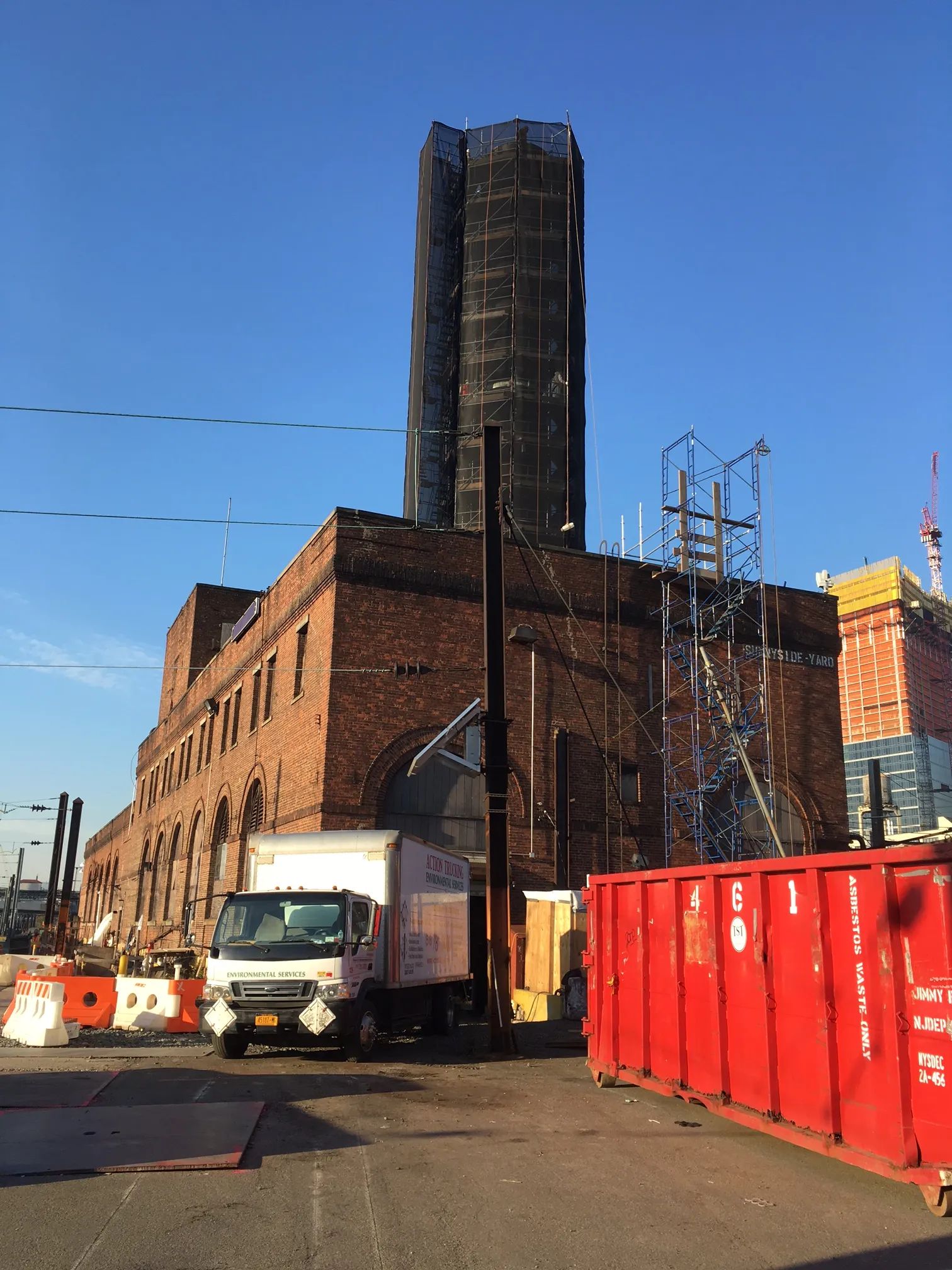
Contractors and owners must provide scaffolding, hoists, ladders, ropes and other devices that are “so constructed, placed and operated as to give proper protection” to the worker. Scaffolding more than 20 feet up needs a safety rail at least 34 inches high, and every scaffold must be built to bear four times the maximum weight it will carry.
The law makes an exception for owners of one- and two-family homes who hire a contractor but do not direct or control the work. Engineers and architects who only plan and design a project are not liable under this section either. So for a claim under section 240, it matters who owned the building and who directed the work.
The New York City Bar Association, the city’s professional organization for lawyers, notes that a defendant is not liable under section 240 if it proves the worker alone caused the accident. Minor repairs or routine maintenance may not count as protected work.
Workers’ compensation and a Labor Law lawsuit
A construction worker hurt on the job is covered by workers’ compensation, the state system of benefits for people hurt at work. The Bar Association explains that it pays regardless of fault and covers medical costs and part of lost wages, but nothing for pain and suffering.
A worker may also sue a third party, meaning someone other than their own employer. Claims against the property owner or the general contractor are often brought under Labor Law sections 200, 240 and 241, which put safety duties on owners and contractors. The maker of faulty equipment can also be a third party.
Under ordinary negligence law, the Bar Association adds, a worker can sue a third party for a dangerous condition that it controlled and knew or should have known was dangerous.
Labor Law section 241 concerns breaches of certain safety codes at a site that cause an injury. Unlike section 240, it is not limited to falls from height. If a third-party claim succeeds, the Bar Association says the worker will usually have to pay back some or all of the workers’ compensation benefits received.
Deadlines for a construction accident claim
The New York City Bar Association says a construction site injury lawsuit must generally be filed within three years of the date of the injury. If the worker died, the family typically has two years from the date of death to bring a wrongful death claim.
Deadlines for claims against a government body can be shorter. A notice of claim may be due within 90 days, so check early whether the site belonged to the City or another public body, for example on a public school or transit project.
How to choose a construction accident lawyer in Queens
Ask a construction accident attorney how many Labor Law 240 and 241 cases the firm has handled, and whether the same office can also deal with your workers’ compensation claim. A construction case often has several defendants, so ask who at the firm will actually work on yours and how often you will hear from them.
Many injury lawyers work on a contingency fee, which means they are paid a share of what you recover. Get the percentage in writing, and ask who pays case costs such as expert fees if the case is lost.
Move quickly, since evidence disappears as scaffolds come down and contractors move on to other jobs. Bring your pay stubs, the names of your employer and the general contractor, photos of the site and your medical records to the first meeting.
Disclaimer: This article is general information, not legal advice. Listing a firm in our directory is not an endorsement or recommendation, and we do not verify attorneys’ credentials or the quality of their services. Using this site does not create an attorney-client relationship. For advice on your situation, contact a qualified lawyer directly.
Sources
- Section 240: Scaffolding and other devices for use of employees, New York State Senate
- Section 241: Construction, excavation and demolition work, New York State Senate
- Blake v. Neighborhood Housing Services of New York City (2003), Legal Information Institute, Cornell Law School
- Construction Site Accidents, New York City Bar Association
Image sources
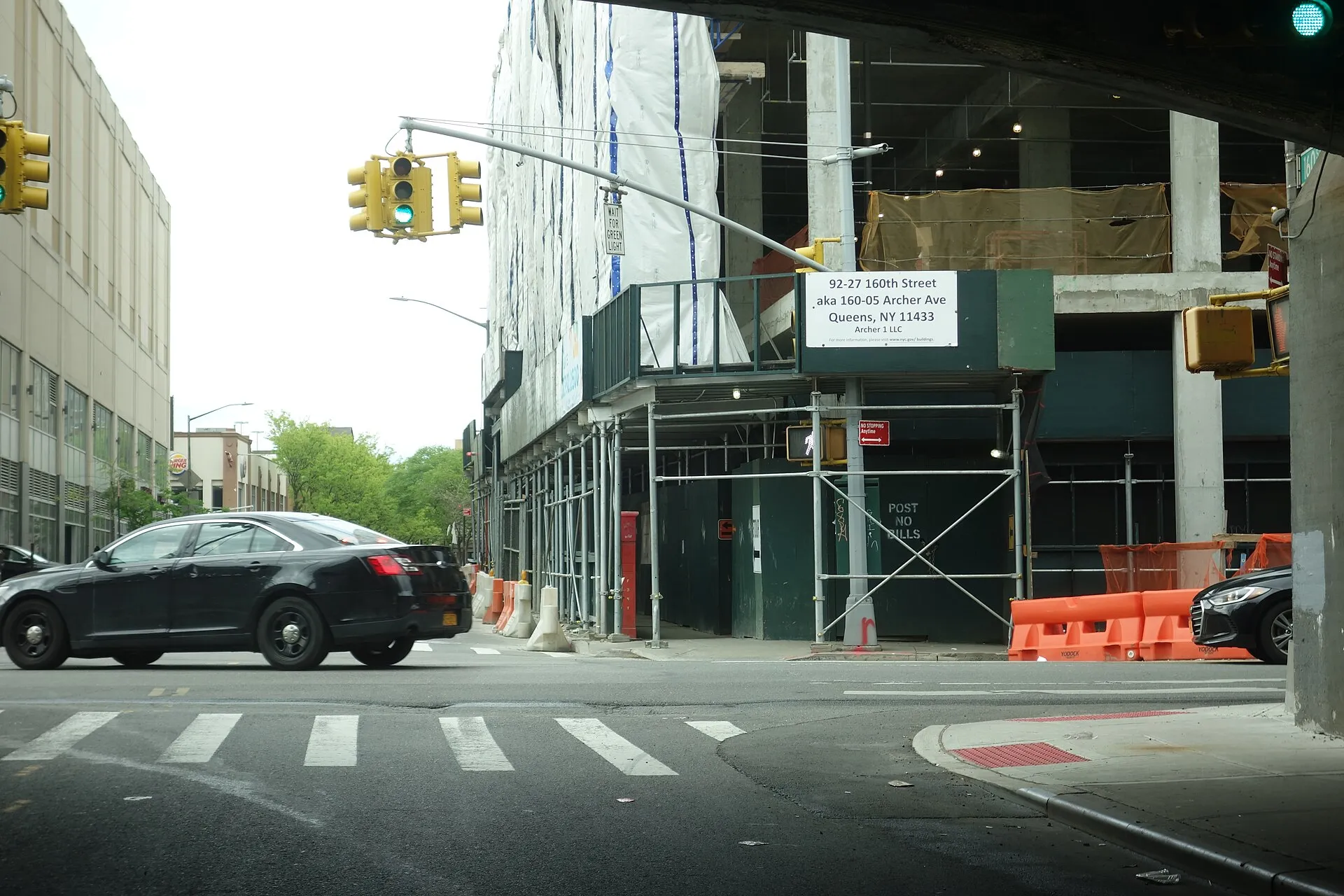
- The One Archer apartment tower under construction at Archer Avenue and 160th Street in Jamaica, Queens, wrapped in white sheeting above a sidewalk shed: Tdorante10, CC BY-SA 4.0 · Wikimedia Commons · Licence
- Workers' scaffolding tower and a netted scaffold around a brick chimney at Sunnyside Yard in Queens, with a dumpster and truck in front: MTA Capital Construction Mega Projects, CC BY 2.0 · Wikimedia Commons · Licence