Astoria, Queens, is a neighborhood in the northwest corner of the borough, on the East River across from Manhattan. Not to be confused with Astoria, Oregon, it is known for its waterfront park under the Hell Gate Bridge, its Greek tavernas, an old Czech beer garden and a century of film history.
Most of the things to do in Astoria are free or cheap and within walking distance of the N and W subway lines. The list below starts by the river, moves through the main food and drink streets, and ends with film history, street art and museums. For background, see our profile of Astoria.
Astoria Park and the Hell Gate Bridge
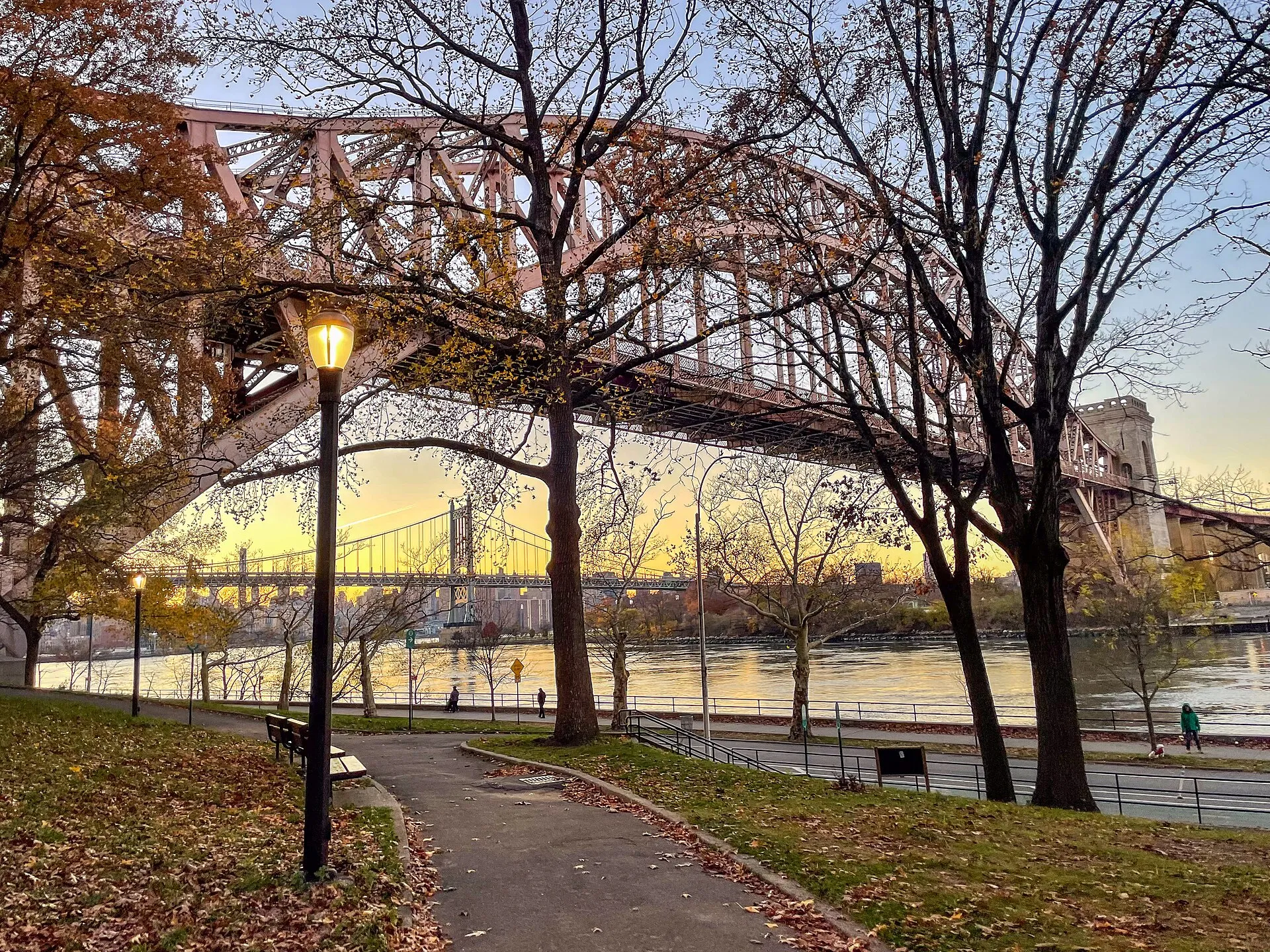
Astoria Park is a sloping, wooded waterfront park of about 66 acres between Ditmars Boulevard and Astoria Park South. According to the designation report of the New York City Landmarks Preservation Commission, the city acquired the first 56 acres of shoreline in 1913, and the park was at first named after Mayor William J. Gaynor.
Two bridges frame the park. The Hell Gate Bridge, a steel arch railroad bridge designed by engineer Gustav Lindenthal and architect Henry Hornbostel, was built over the northern part of the park in 1917. The Triborough Bridge, now the Robert F. Kennedy Bridge, opened in 1936 just to the south, with Manhattan’s skyline between them.
The best way to see both is to walk the promenade along Shore Boulevard, the road at the water’s edge, especially near sunset. The park also has playgrounds, tennis and basketball courts and a running track, so it fills up with locals on summer weekends.
Astoria Pool
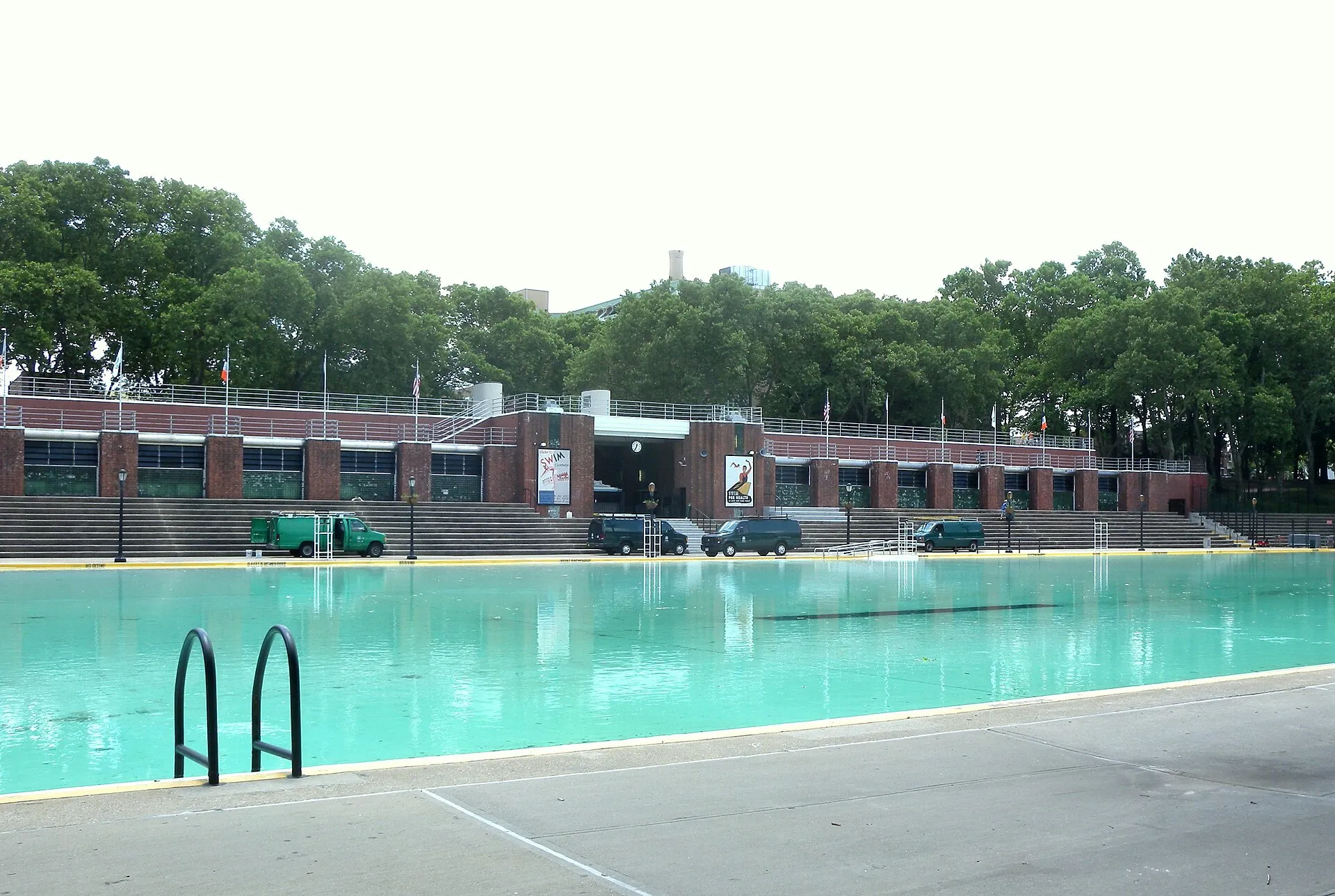
Astoria Pool, inside Astoria Park, is one of eleven large outdoor pools New York City opened in the summer of 1936 with federal Works Progress Administration (WPA) funds, under Mayor Fiorello La Guardia and Parks Commissioner Robert Moses. It opened on July 2, 1936, with room for 6,200 swimmers, and 20,000 people came to the opening.
At 54,450 square feet, it was the city’s largest pool, and the Landmarks Preservation Commission still called it the largest public pool in the city when it made the complex a landmark in 2006. The United States Olympic swimming and diving trials were held there in 1936 and again in 1964.
The pool opens only in summer. Out of season you can still see the brick bath house and the bleachers from the park paths.
Greek food on Ditmars Boulevard, 30th Avenue and Broadway
Greek immigrants settled in Astoria in large numbers from the 1960s, and Greek restaurants, bakeries and cafés are still the neighborhood’s best-known food. Ditmars Boulevard, near the last stop of the N and W trains, and the blocks around 30th Avenue and Broadway have the highest concentration.
Taverna Kyclades, at 36-01 Ditmars Boulevard, is a Greek taverna known for its seafood. Omonia Cafe, at 32-20 Broadway, is a Greek café and bakery that also makes cakes and pastries.
Greek food is only part of the picture. Astoria also has Italian, Brazilian, Balkan and Middle Eastern restaurants, and 30th Avenue in particular is lined with cafés, bakeries and bars that stay busy late into the evening.
Steinway Street and Little Egypt
Steinway Street is Astoria’s main shopping street, running north–south across the neighborhood with stores, chain shops and restaurants. It takes its name from the piano maker Steinway & Sons, which still builds pianos at its factory in Astoria.
The blocks of Steinway Street between 28th Avenue and Astoria Boulevard are known as Little Egypt. Egyptian and other Arab-owned restaurants, bakeries, cafés and hookah lounges line the street, and it is one of the best places in Queens for shawarma, grilled fish and late-night tea.
Bohemian Hall & Beer Garden
Bohemian Hall & Beer Garden, at 29-19 24th Avenue, is a Czech beer hall with a large outdoor garden. Its website calls it New York City’s oldest beer garden, established in 1910, and says it survived Prohibition. It serves Czech and Slovak beer and food.
The garden is the draw on warm evenings, while the hall and its “Den” offer food, games and events when it is too cold for the garden. The website lists it as closed on Mondays except for private events, and open from Tuesday to Sunday, from midday on weekends. Hours can change with the season, so check before you go.
For later nights, Astoria has plenty of bars along 30th Avenue, Broadway and Ditmars Boulevard, and our list of clubs in Queens covers the borough’s dance clubs.
Museum of the Moving Image
The Museum of the Moving Image, on 35th Avenue, is a museum of film, television and video games. It has a permanent exhibition on how moving images are made, changing exhibitions and a busy program of film screenings in its theaters.
The museum is housed in part of the old Astoria Studio complex, next to the studios that still operate today. It is a good rainy-day choice and easy to combine with a meal on Steinway Street, a few blocks away.
Kaufman Astoria Studios
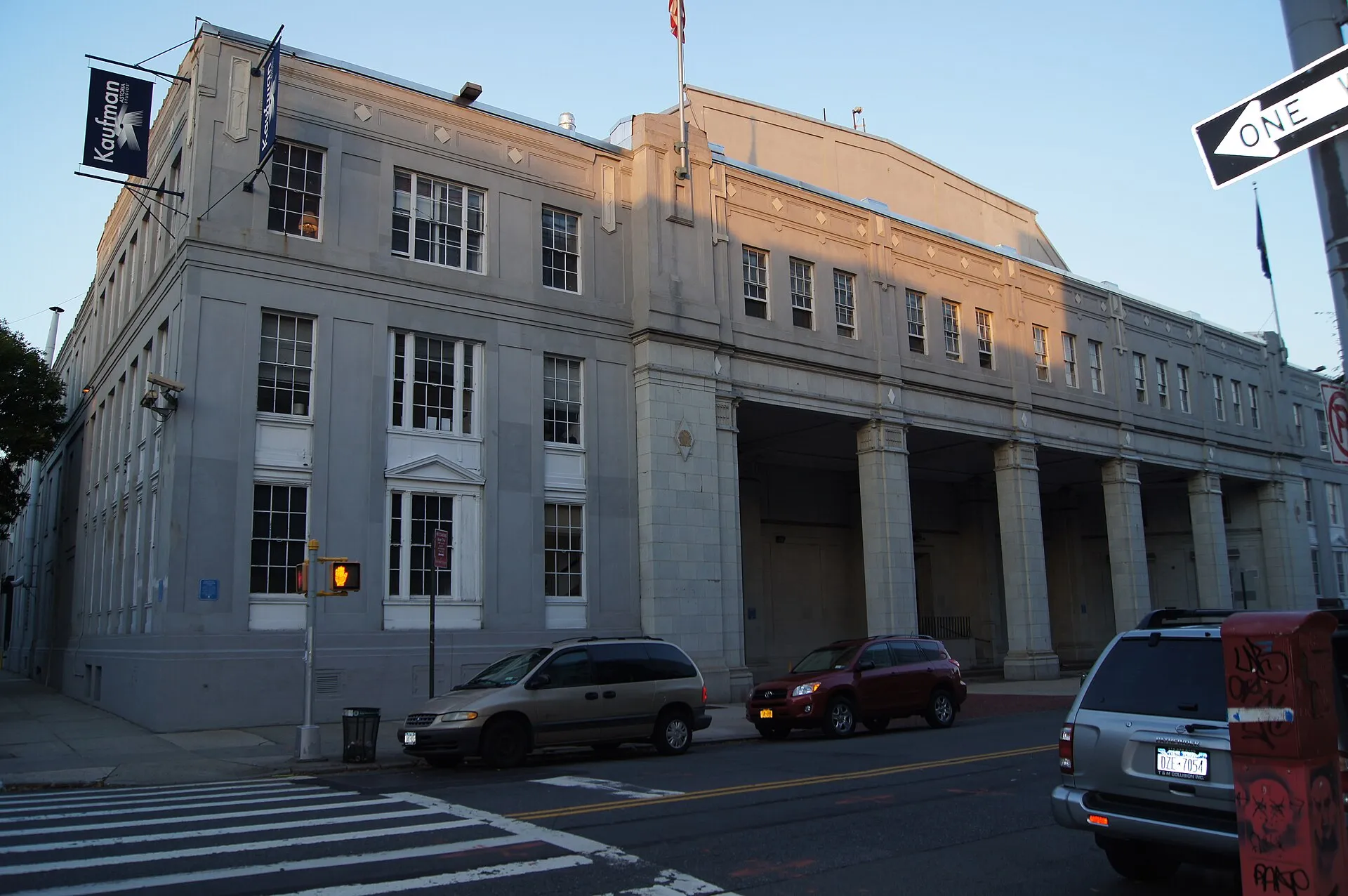
Kaufman Astoria Studios, at 34-12 36th Street, is a working film and television studio, so it is not open for tours. According to the studio’s history page, it was opened by Adolph Zukor in 1920 and became a home for Paramount Pictures; more than 120 silent and sound films were made at the studio over the next 20 years.
During the Second World War, the U.S. Army Signal Corps took over the studio and made training films there as the Army Pictorial Center. After years of disuse, the big stage reopened in 1977 for the film “The Wiz,” and in 1980 New York City brought in developer George S. Kaufman to renovate and expand it.
Today you can see the colonnaded studio building on 35th Avenue from the street, on the way to the Museum of the Moving Image next door.
Welling Court murals
The Welling Court Mural Project is a free, open-air gallery of street art on Welling Court, a short side street off 30th Avenue near 12th Street, close to the river. Since 2009, artists have painted murals on the walls of homes and businesses on the street and on the blocks around it.
There is no entrance or ticket, and the walls change as new murals replace older ones. It is a short walk from Astoria Park or from the ferry landing, so it fits well into a day by the water.
Socrates Sculpture Park and the Noguchi Museum
Socrates Sculpture Park, at 32-01 Vernon Boulevard, is a six-acre outdoor park for large sculpture on the East River, on the border between Astoria and Long Island City. According to the park’s About page, it was an abandoned landfill and illegal dumpsite until artists and community members founded the park in 1986 with sculptor Mark di Suvero.
The park is open every day from 9 a.m. to sunset, and its exhibitions and programs are free. One block away is the Noguchi Museum, devoted to the sculptor Isamu Noguchi, with an indoor gallery and a garden of his sculptures.
Getting to Astoria and where to stay
The N and W trains run on an elevated line through Astoria to the last stop at Ditmars Boulevard, and the M and R trains stop at Steinway Street.
The NYC Ferry Astoria route stops at a landing at 3-10 Astoria Boulevard and connects Astoria with Roosevelt Island, Long Island City and Manhattan stops including East 34th Street and Wall Street.
Astoria is considered safe overall, though busy nightlife spots see some petty theft; see whether Queens is safe.
There are a few hotels in Astoria and many more nearby, listed in our guide to hotels in Queens. The neighboring things to do in Long Island City are a short walk south, things to do in Flushing are a subway ride east, and our list of things to do in Queens covers the rest of the borough.
Sources
- Astoria Park Pool and Play Center (Designation Report), New York City Landmarks Preservation Commission
- Our Legacy, Kaufman Astoria Studios
- Bohemian Hall & Beer Garden, Bohemian Hall & Beer Garden
- About Us, Socrates Sculpture Park
- Astoria Ferry Route & Schedule, NYC Ferry
Image sources
- The steel arch of the Hell Gate Bridge over a path in Astoria Park, with the Triborough Bridge and the East River behind it at sunset: Kenneth C. Zirkel, CC BY 4.0 · Wikimedia Commons · Licence
- Astoria Pool, a very large outdoor public pool with a brick bath house and bleachers: Jim.henderson, public domain · Wikimedia Commons · Licence
- The former Paramount studio building, now Kaufman Astoria Studios, with columns along 35th Avenue: MrShah2012, CC BY-SA 3.0 · Wikimedia Commons · Licence